




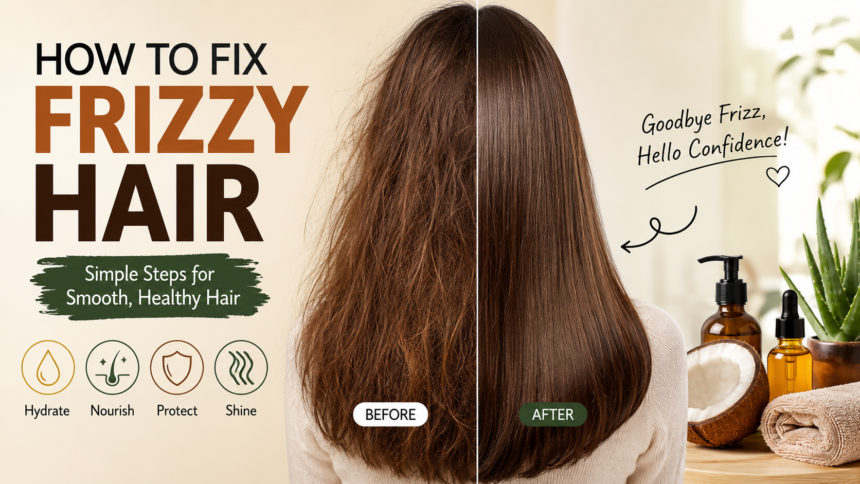
Introduction: Why Frizz Happens and Why It Matters
Frizzy hair is not just a styling issue—it is a sign that your hair needs better care, moisture, and protection. When people search for how to fix frizzy hair, they are usually dealing with dryness, puffiness, or hair that refuses to stay smooth no matter what they do.
- Introduction: Why Frizz Happens and Why It Matters
- Understanding Frizzy Hair in Detail
- Deep Cause Breakdown: What You Might Be Doing Wrong
- Proper Hair Washing Routine for Frizz Control
- Conditioner and Deep Hydration – The Real Game Changer
- Drying Techniques That Reduce Frizz Instantly
- Hair Oils and Serums for Daily Smoothness
- Heat Styling: Hidden Cause of Frizz
- Night Routine for Frizz-Free Morning Hair
- Natural Remedies That Actually Work
- Quick Fixes for Emergency Frizz Control
- Long-Term Strategy for Permanent Frizz Reduction
- Final Thoughts: Building a Frizz-Free Routine That Lasts
The truth is simple: frizz happens when your hair cuticle (outer layer) is raised, allowing moisture from the air to enter unevenly. This makes hair swell and look rough. As one hairstylist explains, “Frizz is simply hair that is out of balance, not out of control.”
In this detailed guide on how to fix frizzy hair, you will learn everything from root causes to deep care routines, daily habits, and long-term solutions that actually work.
Understanding Frizzy Hair in Detail
To truly learn how to fix frizzy hair, you first need to understand what is happening inside your hair strands. Hair is made of protein, and each strand has a protective outer layer called the cuticle.
When the cuticle lies flat, hair looks smooth and shiny. But when it lifts due to dryness or damage, frizz appears.
Common reasons include:
- Lack of moisture in hair strands
- Overuse of heat tools like straighteners or curlers
- Chemical treatments like coloring or rebonding
- Humid weather conditions
- Rough towel drying or harsh brushing
Think of your hair like a roof. If the tiles are lifted, rain (moisture) enters unevenly and causes damage. Similarly, raised cuticles allow humidity in, which creates frizz.
This is why how to fix frizzy hair always begins with restoring moisture balance.
Deep Cause Breakdown: What You Might Be Doing Wrong
Most people unknowingly make small mistakes that worsen frizz. If you are serious about how to fix frizzy hair, you must identify these habits.
Here are common mistakes:
- Washing hair too frequently
- Using shampoo with strong sulfates
- Skipping conditioner after shampoo
- Using hot water while washing hair
- Brushing hair aggressively when wet
Even something as simple as towel rubbing can increase frizz significantly. Wet hair is extremely fragile, and rough handling lifts the cuticle instantly.
As a common salon saying goes, “You don’t get frizz overnight—it builds up from daily habits.”
Fixing these habits is the foundation of how to fix frizzy hair effectively.
Proper Hair Washing Routine for Frizz Control
Washing your hair correctly is one of the most important parts of how to fix frizzy hair. Many people think frequent washing keeps hair clean and healthy, but it often does the opposite.
Follow this improved routine:
- Wash hair only 2–3 times per week
- Use sulfate-free shampoo for gentle cleansing
- Focus shampoo only on scalp, not ends
- Always use lukewarm or cool water
Hot water strips natural oils, leaving hair dry and more prone to frizz. Think of natural oils as your hair’s “built-in conditioner.” Removing them too often makes frizz worse.
A better approach to how to fix frizzy hair is preserving natural moisture instead of constantly removing it.
Conditioner and Deep Hydration – The Real Game Changer
If there is one step that changes everything in how to fix frizzy hair, it is proper conditioning.
Conditioner works by smoothing the cuticle and locking moisture inside the hair strand.
Use it like this:
- Apply conditioner after every wash
- Focus on mid-lengths and ends only
- Leave it for 3–7 minutes
- Rinse with cool water for better sealing
Deep conditioning once or twice a week is even more powerful. It restores softness and reduces puffiness significantly.
You can also use a simple hair mask:
- Aloe vera + coconut oil for hydration
- Banana + honey for softness
- Yogurt + olive oil for repair
As one hair expert says, “Moisture is not a luxury for hair—it is survival.” That statement perfectly explains how to fix frizzy hair at its core.
Drying Techniques That Reduce Frizz Instantly
Drying your hair incorrectly can undo all your care efforts. That is why proper drying is essential in how to fix frizzy hair.
Better drying methods:
- Use a microfiber towel or cotton T-shirt
- Gently squeeze out water instead of rubbing
- Avoid vigorous towel drying
- Air-dry whenever possible
If you must use a blow dryer:
- Use low or medium heat
- Always use a heat protectant spray
- Keep dryer at a distance from hair
Imagine drying hair like drying silk fabric—you would never rub it harshly. The same gentle approach applies in how to fix frizzy hair.
Hair Oils and Serums for Daily Smoothness
Oils and serums are essential finishing tools in how to fix frizzy hair. They seal moisture and create a smooth outer layer.
Best choices include:
- Argan oil for shine and softness
- Coconut oil for deep nourishment
- Lightweight silicone serums for instant smoothness
How to apply:
- Use 2–3 drops only
- Apply on damp or dry hair ends
- Avoid scalp application unless hair is extremely dry
Overusing products can make hair heavy, so balance is important.
A stylist once said, “Good hair is not about more products—it is about the right amount.” That principle applies strongly to how to fix frizzy hair.
Heat Styling: Hidden Cause of Frizz
Excessive heat is one of the biggest reasons people struggle with how to fix frizzy hair.
Flat irons, curlers, and blow dryers damage the cuticle when used daily without protection.
Avoid these mistakes:
- Straightening damp hair
- Using maximum heat settings
- Styling without heat protection
- Daily heat usage
Better alternatives:
- Air-dry styling
- Heatless curls
- Natural texture enhancement
Heat damage is often permanent if repeated too often, which is why reducing it is a major step in how to fix frizzy hair.
Night Routine for Frizz-Free Morning Hair
Your nighttime habits also affect how to fix frizzy hair more than you might think.
At night, friction between hair and pillow causes dryness and tangles.
Fix it with:
- Silk or satin pillowcases
- Loose braids or buns
- Light leave-in conditioner before bed
Cotton fabric absorbs moisture from hair, making it dry and frizzy by morning. Silk helps maintain smoothness.
This small change can dramatically improve results in how to fix frizzy hair over time.
Natural Remedies That Actually Work
Natural care is a powerful part of how to fix frizzy hair without heavy chemicals.
Try these:
- Aloe vera gel for hydration and shine
- Apple cider vinegar rinse for smooth cuticles
- Honey masks for deep moisture
- Coconut oil treatment before washing
These ingredients work by restoring natural balance to your hair. They are simple but effective when used consistently.
One beauty expert often says, “Nature doesn’t repair hair instantly, but it restores it slowly and deeply.” This is key in understanding how to fix frizzy hair naturally.
Quick Fixes for Emergency Frizz Control
Sometimes you need fast results before going out. Here’s how how to fix frizzy hair works in emergency situations:
- Apply a drop of serum on flyaways
- Lightly dampen hair and smooth with hands
- Use a tiny amount of hair oil on ends
These are temporary solutions but very useful for quick styling.
Think of them as “instant rescue steps” in your how to fix frizzy hair routine.
Long-Term Strategy for Permanent Frizz Reduction
If you truly want lasting results from how to fix frizzy hair, consistency is everything.
Long-term habits:
- Trim hair every 6–8 weeks
- Eat protein-rich foods for hair strength
- Drink enough water daily
- Avoid excessive coloring or chemical treatments
Healthy hair grows from inside the body, not just external care. Nutrition plays a huge role in how to fix frizzy hair success.
As professionals often say, “You don’t treat frizz—you build hair that resists frizz.”
Final Thoughts: Building a Frizz-Free Routine That Lasts
Learning how to fix frizzy hair is not about one quick fix or a single product. It is about understanding your hair’s needs and consistently giving it the right care, moisture, and protection.
When you combine gentle washing, proper conditioning, smart drying methods, and healthy daily habits, frizz naturally reduces over time. Your hair starts to feel softer, smoother, and easier to manage without constant effort.
The real key to how to fix frizzy hair is consistency. Small changes done daily—like using less heat, sleeping on silk, and keeping hair hydrated—create long-term results that actually last.
Once your routine is in balance, frizz stops being a constant struggle and becomes something you can easily control.
Also Read: Herald Magazine