



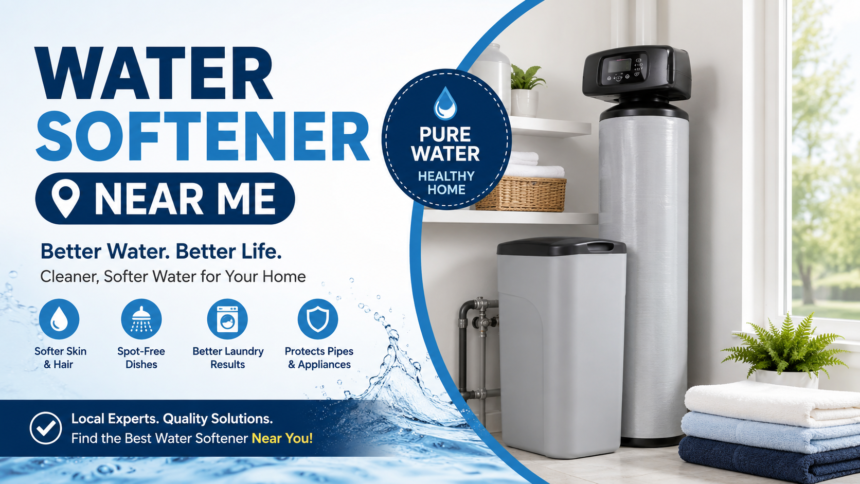
If you have been searching for a water softener near me, chances are you are dealing with hard water problems at home. Hard water contains high levels of minerals like calcium and magnesium. While these minerals are not harmful to your health, they can create several daily frustrations, from stained sinks to dry skin and damaged appliances.
- What Is a Water Softener?
- Signs You Need a Water Softener
- Benefits of Installing a Water Softener
- Better Appliance Performance
- Cleaner Bathrooms and Kitchens
- Softer Laundry
- Improved Shower Experience
- Reduced Plumbing Problems
- How a Water Softener Works
- Types of Water Softeners
- Salt-Based Water Softeners
- Salt-Free Water Conditioners
- Dual-Tank Water Softeners
- Magnetic and Electronic Systems
- How to Find the Best Water Softener Near Me
- What Does a Water Softener Cost?
- Questions to Ask Before Buying
- Water Softener Maintenance Tips
- Common Myths About Water Softeners
- Myth 1: Hard Water Is Dangerous
- Myth 2: Water Softeners Require Constant Attention
- Myth 3: All Water Softeners Are the Same
- Myth 4: They Are Too Expensive
- Real-Life Example
- Is a Water Softener Worth It?
- Final Thoughts
Finding the right water softener near me can make a noticeable difference in your home. Softened water helps protect plumbing, improves cleaning results, and can even extend the life of your household appliances.
This guide explains everything you need to know before choosing a water softener, how it works, and what to expect when searching for local installation services.
What Is a Water Softener?
A water softener is a system designed to remove excess minerals from hard water. It uses a process called ion exchange to replace calcium and magnesium with sodium or potassium ions.
When people search for a water softener near me, they are usually looking for a solution to common hard water issues such as:
- White spots on dishes
- Soap that does not lather well
- Dry skin and hair
- Mineral buildup on faucets
- Reduced appliance efficiency
- Stiff laundry after washing
Think of a water softener as a filter that helps your water behave better throughout your home.
Signs You Need a Water Softener
Many homeowners live with hard water for years without realizing it. However, there are clear warning signs that indicate it may be time to look for a water softener near me.
Mineral Deposits Around Fixtures
If you notice white or chalky buildup around faucets, showerheads, or sinks, hard water minerals are likely accumulating over time.
Dry Skin and Hair
Hard water can make soap less effective. As a result, many people experience dry skin, dull hair, and irritation after showering.
Spots on Glassware
Clean dishes should sparkle. If glasses come out of the dishwasher covered in cloudy spots, hard water could be the reason.
Higher Energy Bills
Water heaters work harder when mineral deposits build up inside them. This can increase energy consumption over time.
As many homeowners discover, “The cost of ignoring hard water is often much higher than the cost of fixing it.”
Benefits of Installing a Water Softener
Searching for a water softener near me is often the first step toward solving multiple household problems at once.
Better Appliance Performance
Soft water helps protect appliances such as:
- Washing machines
- Dishwashers
- Water heaters
- Coffee makers
Without mineral buildup, these appliances often last longer and operate more efficiently.
Cleaner Bathrooms and Kitchens
Soft water reduces scale deposits on surfaces. This means less scrubbing and easier maintenance.
Softer Laundry
Clothes washed in soft water generally feel softer and maintain their colors longer.
Improved Shower Experience
Many homeowners report smoother skin and softer hair after switching to softened water.
Reduced Plumbing Problems
Minerals can gradually clog pipes. Soft water helps reduce this buildup and supports better water flow throughout the home.
How a Water Softener Works
Understanding the basics can help you make a smarter decision when searching for a water softener near me.
The system contains a tank filled with resin beads. These beads attract and hold calcium and magnesium ions.
As water flows through the tank:
- Hard water enters the system.
- Minerals attach to the resin beads.
- Softened water exits the tank.
- The system periodically regenerates using salt.
This process happens automatically in most modern units.
The result is water that feels smoother and causes fewer household issues.
Types of Water Softeners
Not all systems are the same. When researching a water softener near me, you may encounter several options.
Salt-Based Water Softeners
These are the most common systems.
Advantages include:
- Highly effective mineral removal
- Reliable performance
- Suitable for very hard water
They require regular salt refills to maintain operation.
Salt-Free Water Conditioners
Instead of removing minerals, these systems alter their structure to reduce scaling.
Benefits include:
- Lower maintenance
- No salt required
- Environmentally friendly
However, they may not be as effective in areas with extremely hard water.
Dual-Tank Water Softeners
These systems use two resin tanks.
Advantages include:
- Continuous soft water supply
- Ideal for large families
- Excellent performance during high usage
Magnetic and Electronic Systems
These units attempt to reduce scaling through electromagnetic technology.
While some homeowners report positive results, effectiveness can vary depending on water conditions.
How to Find the Best Water Softener Near Me
Searching online for a water softener near me will likely produce dozens of local options. Choosing the right provider requires careful evaluation.
Read Customer Reviews
Reviews often reveal valuable information about:
- Installation quality
- Customer service
- Reliability
- Maintenance support
Look for consistent positive feedback rather than a few isolated reviews.
Request a Water Test
A professional water test identifies:
- Hardness levels
- Mineral content
- Additional contaminants
This information helps determine the best system size and type.
Compare Warranties
A strong warranty demonstrates confidence in the product.
Pay attention to coverage for:
- Tanks
- Valves
- Electronics
- Labor
Ask About Maintenance Plans
Some local providers offer ongoing service packages that include inspections and salt delivery.
What Does a Water Softener Cost?
The price of a water softener near me depends on several factors.
These may include:
- System size
- Brand
- Installation complexity
- Water hardness level
- Additional filtration features
Typical costs may include:
| Item | Estimated Cost |
|---|---|
| Basic System | $500–$1,000 |
| Mid-Range System | $1,000–$2,500 |
| Premium System | $2,500–$5,000+ |
| Professional Installation | $300–$1,500 |
Although the upfront cost may seem significant, many homeowners save money over time through reduced appliance repairs and improved efficiency.
Questions to Ask Before Buying
Before choosing a water softener near me, ask the installer these important questions.
- How hard is my water?
- What size system do I need?
- What maintenance is required?
- How often will salt need refilling?
- Is installation included?
- What warranty is provided?
- Are financing options available?
These questions can help you avoid surprises later.
Water Softener Maintenance Tips
A properly maintained system can last many years.
Check Salt Levels Regularly
Most salt-based systems need periodic refilling. Monitor the brine tank to ensure proper operation.
Clean the Brine Tank
Occasional cleaning helps prevent salt bridges and buildup.
Schedule Annual Inspections
Professional inspections can identify issues before they become expensive repairs.
Use High-Quality Salt
Premium salt products often reduce residue and improve performance.
As experts often say, “A little maintenance today can prevent major repairs tomorrow.”
Common Myths About Water Softeners
There are several misconceptions about water softening systems.
Myth 1: Hard Water Is Dangerous
Hard water is generally safe to drink. The issue is more about convenience, efficiency, and appliance protection.
Myth 2: Water Softeners Require Constant Attention
Modern systems are largely automatic and require minimal maintenance.
Myth 3: All Water Softeners Are the Same
Different homes have different water conditions. The best system depends on your specific needs.
Myth 4: They Are Too Expensive
Many homeowners find that the long-term savings outweigh the initial investment.
Real-Life Example
Imagine two identical homes in the same neighborhood.
One family installs a water softener near me service after noticing scale buildup and cloudy dishes. The other family continues using untreated hard water.
Five years later, the first family experiences fewer plumbing issues, cleaner fixtures, and better appliance performance. Meanwhile, the second family spends more on maintenance and replacement costs.
This simple example shows why many homeowners view a water softener as a practical investment rather than an expense.
Is a Water Softener Worth It?
For many households, the answer is yes.
If you struggle with hard water stains, dry skin, appliance inefficiency, or mineral buildup, installing a water softener near me can provide immediate and long-term benefits.
The key is choosing a system that matches your home’s water conditions and working with a trusted local installer.
When you consider cleaner dishes, softer laundry, better plumbing performance, and longer-lasting appliances, a quality water softener can become one of the most valuable upgrades you make to your home.
Final Thoughts
Finding the right water softener near me is about more than convenience. It is about improving everyday life, protecting your home’s plumbing system, and reducing the impact of hard water on appliances and surfaces.
Take time to compare local providers, request a professional water test, and choose a system designed for your household’s specific needs. A properly installed water softener can deliver years of cleaner, softer, and more efficient water throughout your home.
Also Read: Herald Magazine