




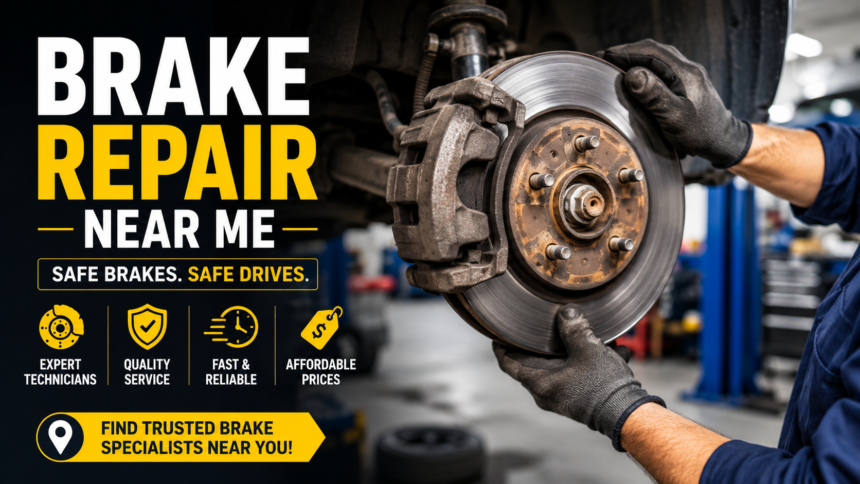
Your vehicle’s brakes are the most important safety system on the road. Whether you’re driving to work, taking your family on a road trip, or running daily errands, properly working brakes help you stop safely every time.
- Loud Squealing
- Grinding Noise
- Brake Pedal Feels Soft
- Vehicle Pulls Left or Right
- Vibrations While Braking
- Brake Pad Replacement
- Brake Rotor Replacement
- Brake Fluid Flush
- Brake Caliper Repair
- ABS Diagnostics
- How often should brakes be inspected?
- Can worn brake pads damage rotors?
- Is brake fluid replacement necessary?
- Can I replace only one brake pad?
- Why do new brakes sometimes squeak?
If you’ve been searching for brake repair near me, you’re probably hearing unusual sounds, feeling vibrations, or noticing that your car doesn’t stop as smoothly as it used to. The good news is that catching brake problems early can save money and prevent expensive repairs later.
As many mechanics say, “Ignoring a small brake problem today can become a major safety issue tomorrow.” That’s why it’s always better to inspect your brakes before a minor issue turns into a serious one.
Why You Might Need Brake Repair Near Me
Brakes wear down naturally over time. Every time you press the brake pedal, the brake pads create friction that slowly wears away the material.
Common reasons drivers search for **brake repair near me **include:
- Squeaking or squealing brakes
- Grinding sounds
- Brake warning light
- Soft or spongy brake pedal
- Vibrating steering wheel while braking
- Car pulling to one side
- Longer stopping distance
- Burning smell after heavy braking
Even one of these symptoms is enough to schedule an inspection.
Signs Your Brakes Need Immediate Attention
Your vehicle usually gives warning signs before complete brake failure.
Loud Squealing
Most brake pads include wear indicators that create a squealing sound when replacement is needed.
Think of it as your car politely saying, “Please replace my brake pads soon.”
Grinding Noise
Grinding often means the brake pads have worn completely away.
Metal rubbing against metal can quickly damage the brake rotors, making repairs much more expensive.
Brake Pedal Feels Soft
If your brake pedal sinks too far or feels soft, there may be:
- Air in the brake lines
- Brake fluid leak
- Master cylinder issue
This problem should never be ignored.
Vehicle Pulls Left or Right
Uneven braking can cause your vehicle to drift during braking.
This may indicate:
- Stuck brake caliper
- Uneven brake pad wear
- Brake fluid issues
Vibrations While Braking
A shaking steering wheel often means warped brake rotors.
Brake resurfacing or rotor replacement may solve the problem.
Common Brake Repair Services
When searching for **brake repair near me **you’ll usually find these services.
Brake Pad Replacement
Brake pads wear out faster than most brake components.
Replacing them on time prevents damage to the rotors.
Brake Rotor Replacement
Rotors provide the surface that brake pads grip.
If they’re cracked, warped, or worn too thin, replacement becomes necessary.
Brake Fluid Flush
Brake fluid absorbs moisture over time.
Fresh brake fluid improves braking performance and protects internal brake components.
Brake Caliper Repair
Brake calipers squeeze the brake pads against the rotors.
Damaged calipers can cause uneven braking and excessive pad wear.
ABS Diagnostics
Modern vehicles use Anti-lock Braking Systems (ABS).
If the ABS warning light appears, professional diagnostics help identify electrical or sensor problems.
How Long Do Brake Pads Last?
Brake pad lifespan depends on driving habits.
Average lifespan:
- City driving: 25,000–40,000 miles
- Highway driving: 40,000–70,000 miles
- Heavy towing: Less than 25,000 miles
Aggressive braking shortens brake life significantly.
What Causes Brakes to Wear Faster?
Several driving habits increase brake wear.
These include:
- Frequent stop-and-go traffic
- Riding the brakes downhill
- Heavy vehicle loads
- Hard braking
- Poor quality brake pads
Smooth driving extends brake life considerably.
How Much Does Brake Repair Near Me Cost?
Repair costs depend on your vehicle and the parts required.
Typical price ranges include:
| Service | Average Cost |
|---|---|
| Brake inspection | Often free or low-cost |
| Brake pad replacement | $150–$350 per axle |
| Rotor replacement | $250–$600 |
| Brake fluid flush | $80–$150 |
| Caliper replacement | $300–$800 |
Luxury vehicles usually cost more because of specialized parts.
Can You Drive with Bad Brakes?
Technically yes—but it’s extremely risky.
Driving with worn brakes can increase stopping distance, damage expensive components, and raise the chance of an accident.
Remember the saying: “Brakes don’t just stop your car—they protect every life inside it.”
How Long Does Brake Repair Take?
Most brake services are completed quickly.
Typical repair times:
- Brake pad replacement: 1–2 hours
- Pads and rotors: 2–3 hours
- Brake fluid flush: About 1 hour
- Full brake service: 2–4 hours
Many repair shops even offer same-day service.
Choosing the Best Brake Repair Near Me
Not every repair shop offers the same level of service.
Look for shops that provide:
- Certified mechanics
- Digital inspections
- Warranty on parts
- Honest pricing
- Positive customer reviews
- Free brake inspections
- Quality replacement parts
A trustworthy shop explains repairs before beginning any work.
Questions to Ask Before Brake Repair
Before approving repairs, ask:
- What’s causing the problem?
- Are the rotors reusable?
- Which brake pads are being installed?
- Is there a warranty?
- Can I see the worn parts?
- Is brake fluid replacement recommended?
Good repair shops appreciate informed customers.
DIY Brake Checks You Can Perform
While repairs should usually be left to professionals, you can perform simple inspections.
Check:
- Brake fluid level
- Dashboard warning lights
- Brake noises
- Visible brake pad thickness
- Brake pedal feel
These quick checks help detect problems early.
How to Make Your Brakes Last Longer
Good driving habits save money.
Helpful tips include:
- Brake gently whenever possible.
- Keep a safe following distance.
- Avoid unnecessary hard stops.
- Reduce vehicle weight.
- Schedule regular inspections.
- Replace worn brake pads promptly.
Small habits often add thousands of miles to brake life.
What Happens During a Brake Inspection?
A complete inspection usually includes checking:
- Brake pads
- Brake rotors
- Brake calipers
- Brake hoses
- Brake fluid
- ABS system
- Brake lines
- Parking brake
This thorough inspection ensures your braking system works safely.
Should You Replace Rotors Every Time?
Not always.
If rotors remain within manufacturer specifications and have minimal wear, resurfacing may be enough.
However, severely worn or damaged rotors should always be replaced.
A qualified technician can measure rotor thickness accurately.
Benefits of Professional Brake Repair
Professional brake service provides peace of mind.
Advantages include:
- Improved stopping performance
- Better fuel efficiency
- Longer brake component life
- Enhanced driving confidence
- Manufacturer-approved parts
- Proper installation
Quality repairs help keep you and your passengers safe.
Frequently Asked Questions
How often should brakes be inspected?
Most experts recommend a brake inspection every 10,000 to 15,000 miles or during routine maintenance.
Can worn brake pads damage rotors?
Yes. Once brake pads wear out completely, metal contacts the rotor and causes expensive damage.
Is brake fluid replacement necessary?
Yes. Brake fluid absorbs moisture over time, reducing braking performance and potentially damaging the braking system.
Can I replace only one brake pad?
No. Brake pads should always be replaced in pairs on the same axle to maintain balanced braking.
Why do new brakes sometimes squeak?
New brake pads may produce temporary noise while bedding in. Persistent squeaking should be inspected by a mechanic.
Final Thoughts
Searching for **brake repair near me **is often the first step toward keeping your vehicle safe and reliable. Whether your brakes are making unusual noises, vibrating, or simply due for maintenance, prompt repairs can prevent costly damage and improve your confidence behind the wheel.
Never ignore early warning signs. Regular inspections, quality replacement parts, and skilled technicians can extend the life of your braking system while ensuring every drive is as safe as possible. As the saying goes, “Good brakes don’t just stop a vehicle—they protect every journey you take.”
Also Read: Herald Magazine